Leading design
Yieldstreet.
Building a design organization from the first hire, inside a regulated fintech scaling past $1B.
Role
Head of Design · First designer → team of 10 · Leadership team, reporting to the CEO
Timeline
2017–2022
Scale reached
400K+ users · $1B+ in assets · 200+ employees
Context
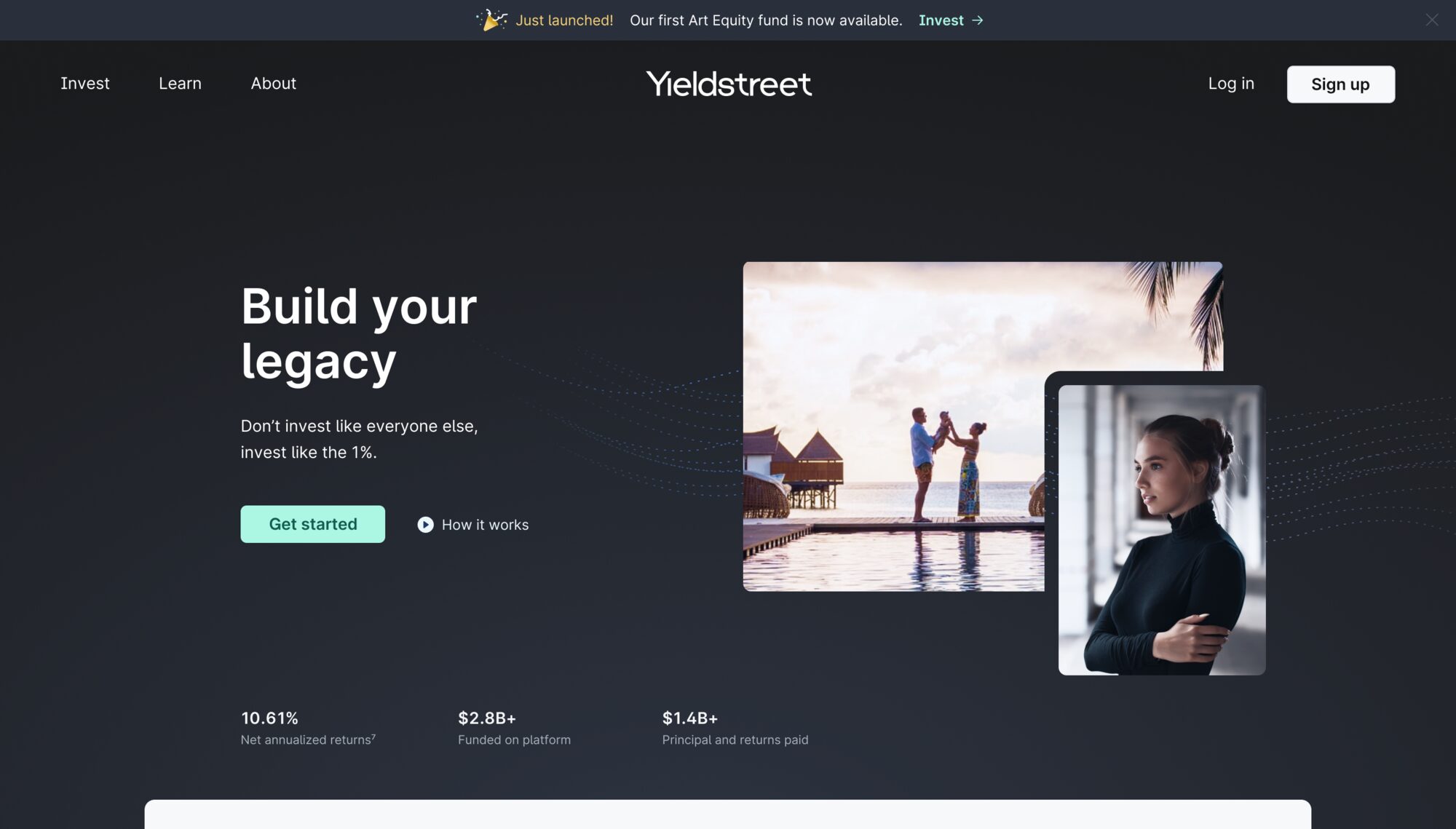
I joined Yieldstreet as the first designer. Alternative investing (private credit, real estate, art, legal finance) had always been walled off for the ultra-wealthy and their advisors. Yieldstreet's bet was to open it to everyday accredited investors, which meant taking genuinely complex, illiquid, regulated financial products and making them something a normal person could understand and trust with real money.
There was no design team, no system, no research practice. There was a lot of ambition, a lot of regulatory constraint, and a product that had to earn trust on the first visit.
The mandate
Build the design function, and build it into the company's operating fabric. Not a service desk that decorates features after the fact, but a discipline that shapes what gets built and why. In parallel: make a complicated, high-stakes experience feel clear and trustworthy, and keep it that way as the company scaled fast.
The core design problem
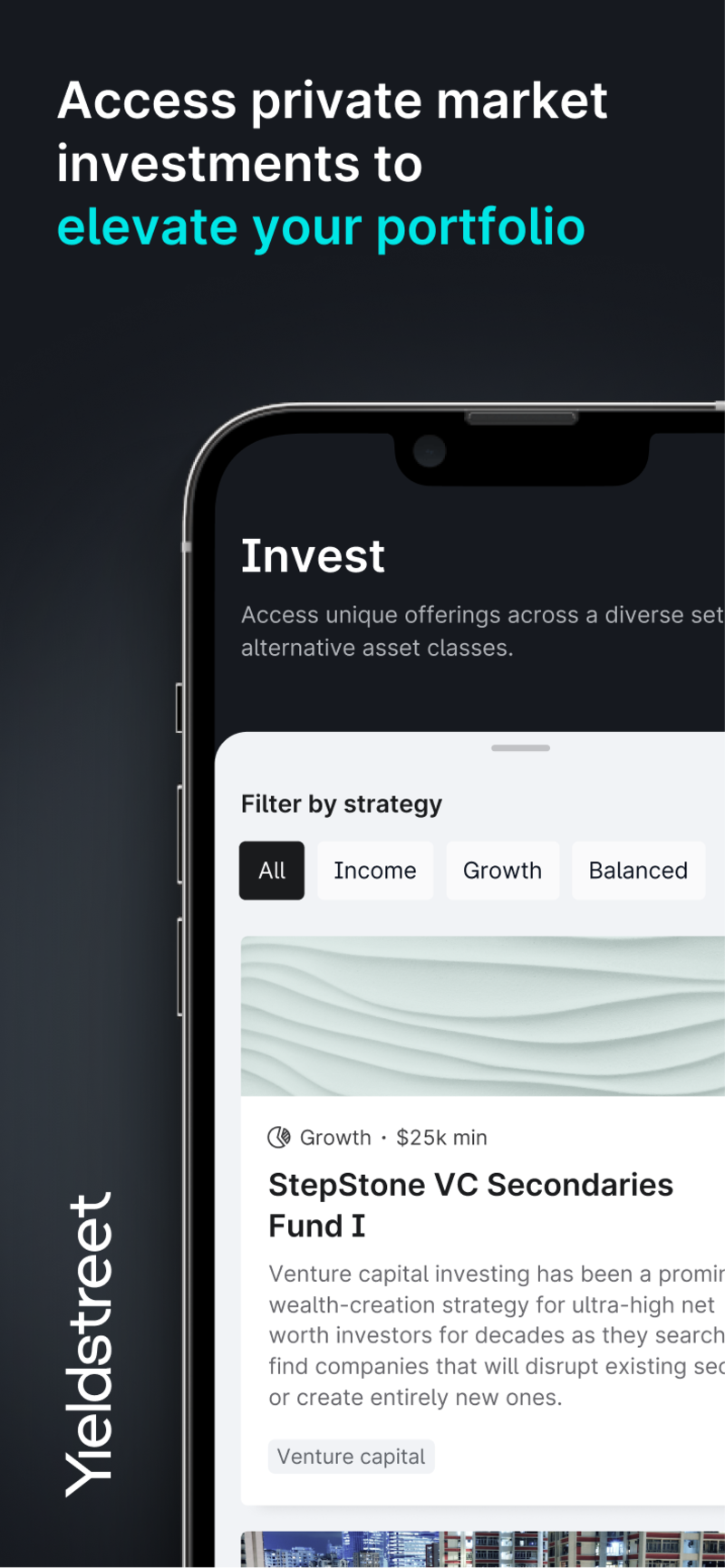
The hardest and most important problem was who we were designing for. We were opening genuinely complex investments (private credit, real estate, art, legal finance) to a much broader audience. Most of the new investors we were attracting had never seen products like these and didn't know the terminology, but we were also serving sophisticated investors who expected the depth and detail they were used to. One product had to work for both.
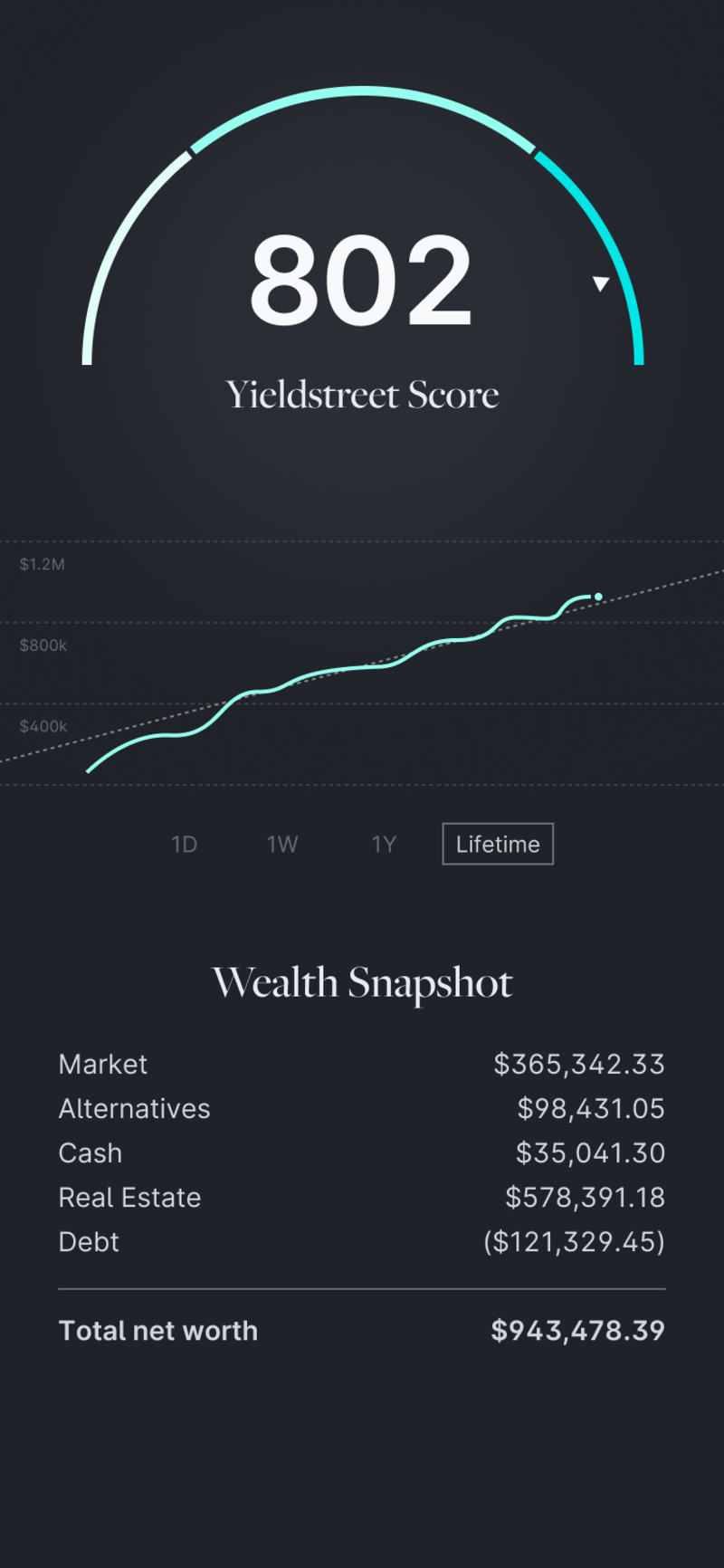
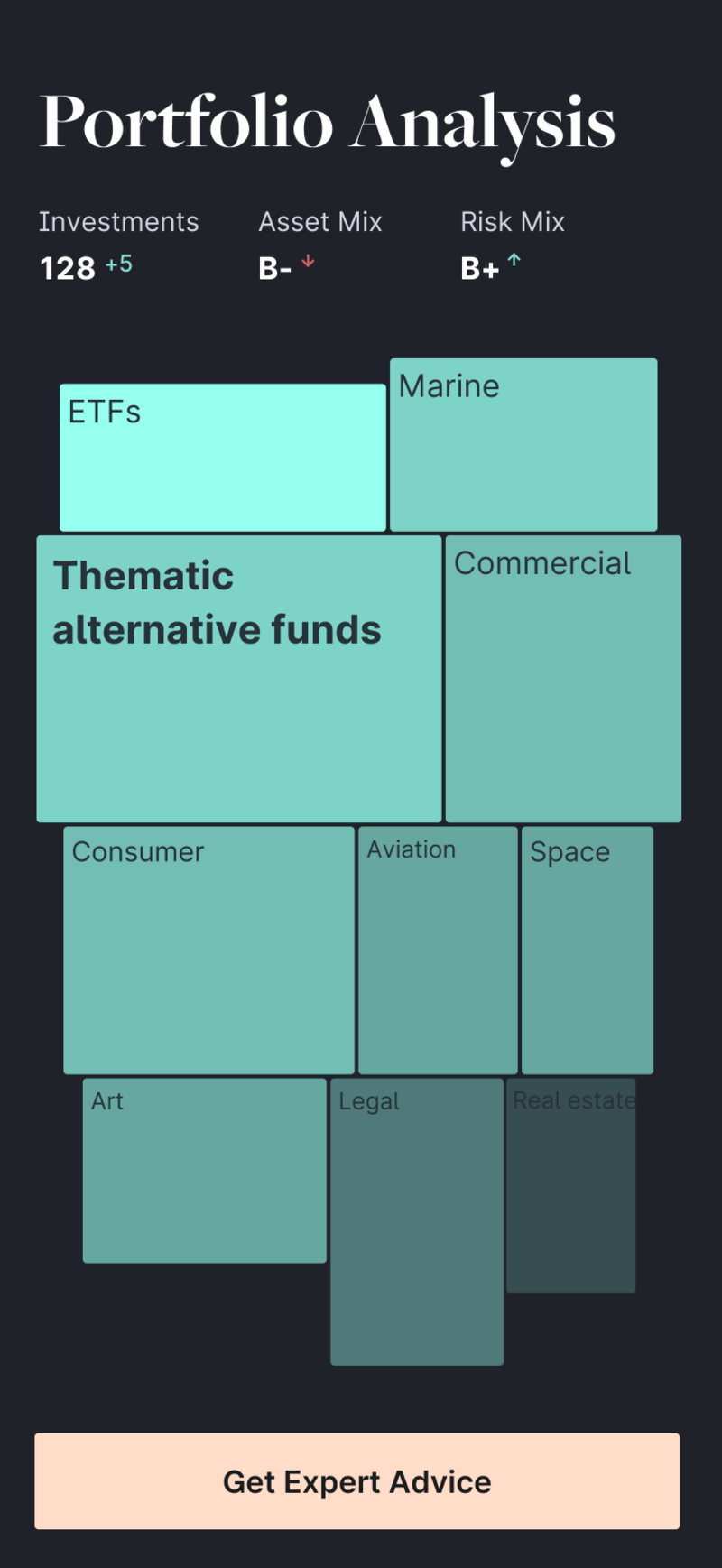
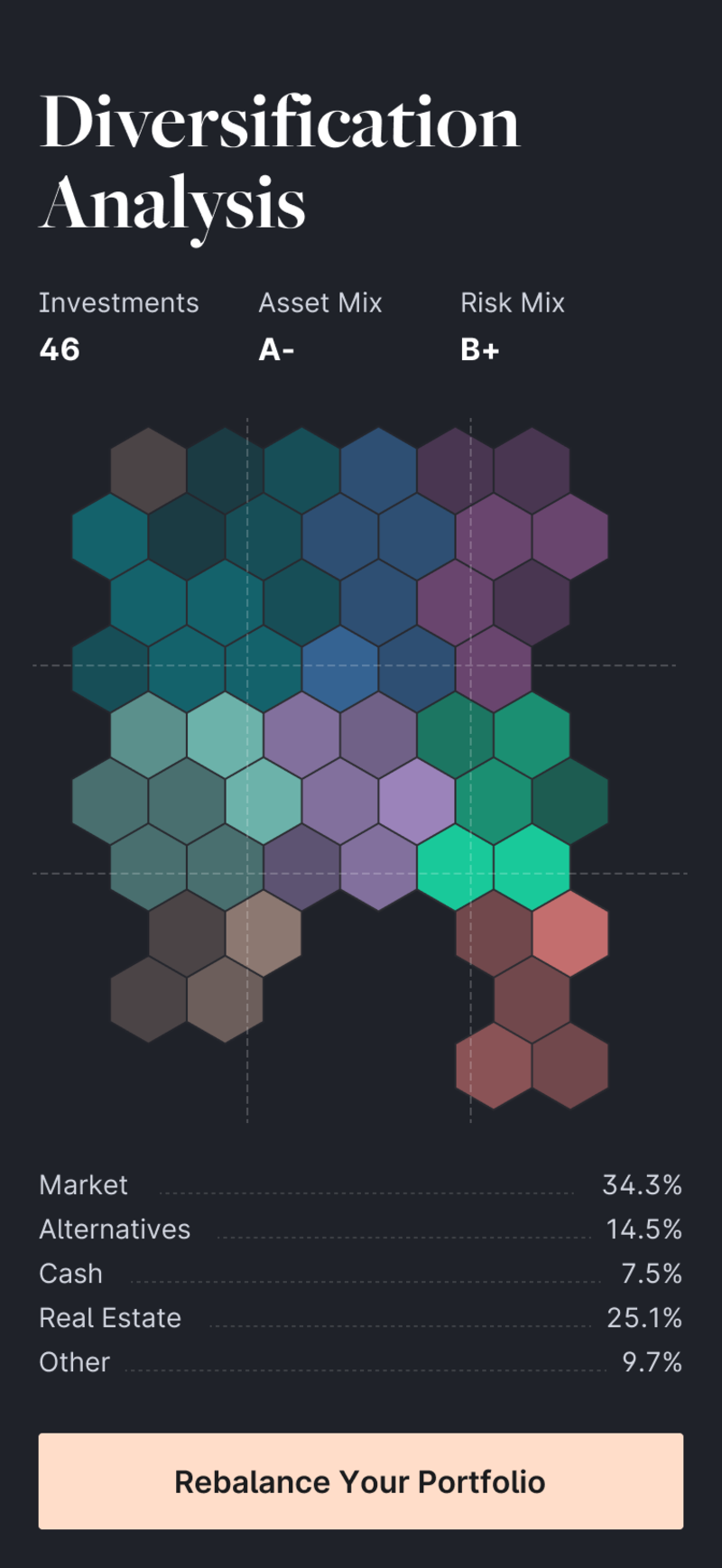
The team's answer was to design for progressive disclosure rather than a lowest common denominator. We were deliberate about how much technical language showed by default, and leaned on visualization to explain concepts that a wall of jargon never could, so a newcomer could build confidence while an expert could still drill into the numbers they cared about. On top of that, each asset class behaved differently and needed its own treatment, so we designed patterns that were consistent across the platform but bespoke where the underlying investment demanded it.
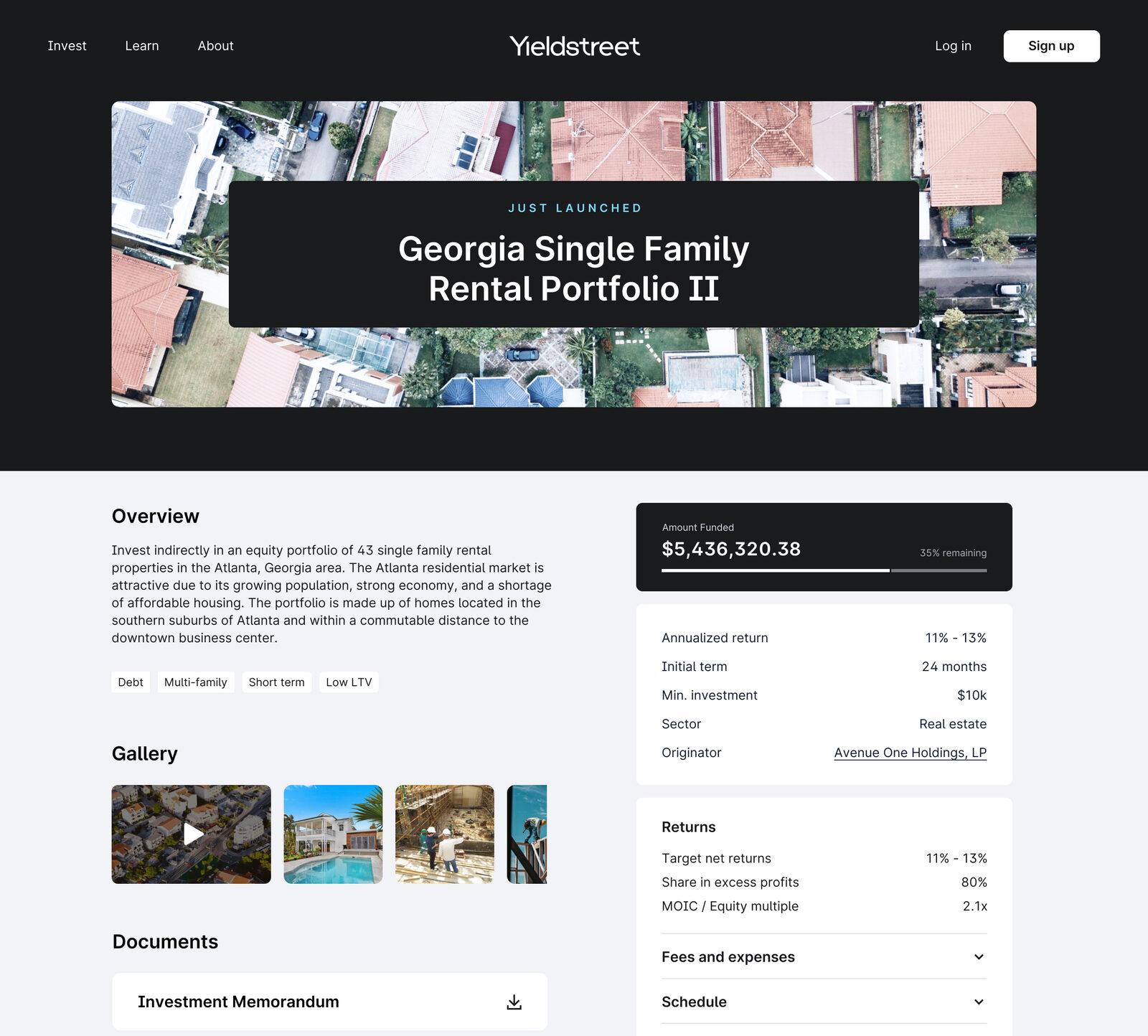
This was the funnel. There was no funnel when I arrived; I built it from nothing, then redesigned it several times as the audience grew. Getting an investor to commit real money meant designing the onboarding that brought them in and, just as importantly, a product page for each individual investment that made a complex opportunity legible enough to say yes to. That page is where legibility turned into conversion. This is how I measure design success: not in colors and fonts, but in whether the work moved someone to act. Reaching 400,000 investors was a design problem, and solving it is the work I'm proudest of here.
What I did
Built the org from scratch. I hired and grew a team of ten designers and researchers, set the standard for what we shipped and who we hired, and shaped the way the team worked with product and engineering. As a member of the leadership team reporting to the CEO, I made sure design had a real voice in strategy, not just execution, and then I gave the team the room to do the best work of their careers.
Stood up a design system and a research-led practice from nothing. I set the direction, and the team built a system that served engineers as much as designers: patterns that let the whole org move faster and stay consistent as headcount multiplied. The research practice we established meant major decisions were grounded in how investors actually thought and behaved, not in internal opinion.
Designed for trust under real constraint. Every decision had to satisfy KYC, AML, and SEC requirements, and the product handled real money movement: ACH, wire, wallet accounts, and open banking. We worked shoulder to shoulder with Risk, Data, and Compliance so the guardrails were part of the experience from the first sketch, not bolted on. The hard part of this work isn't making it pretty; it's making something regulated and complex feel calm and legible to someone about to commit their savings.
Kept refining it as we scaled. We rebuilt the core funnel three separate times as the audience grew larger and more diverse, each pass grounded in research and iterative testing rather than opinion, so the experience kept converting even as who we were designing for changed underneath us.
Outcome
- Made complex alternative investments approachable to a mainstream audience without losing the sophisticated investors. The funnel I built and kept refining helped grow the platform to 400K+ investors and over $1B in assets as the company scaled past 200 employees.
- Established design as a leadership-level discipline, and left behind a durable system and research practice that outlasted any single project.
- Built a team, and a bar for craft, that could carry the work forward without me.
What it shows
This is the clearest example of what I do as a leader: I build design organizations from nothing, tie them into how the company actually decides, and hold a high bar for craft where the stakes are real. I have led teams at this altitude before and since, including a team of eight designers at Penton, so this is a pattern rather than a one-time bet. Regulated fintech is an unforgiving place to design. Get it wrong and people lose trust or money, and that constraint is exactly what makes the discipline matter, and what makes a strong team worth building.
Selected screens