How I work now
Futurestay.
Leading product and design for a short-term-rental platform, and changing the way a small team builds: prototype in real code, preview on the live frontend, hand off to engineering.
View the full case study →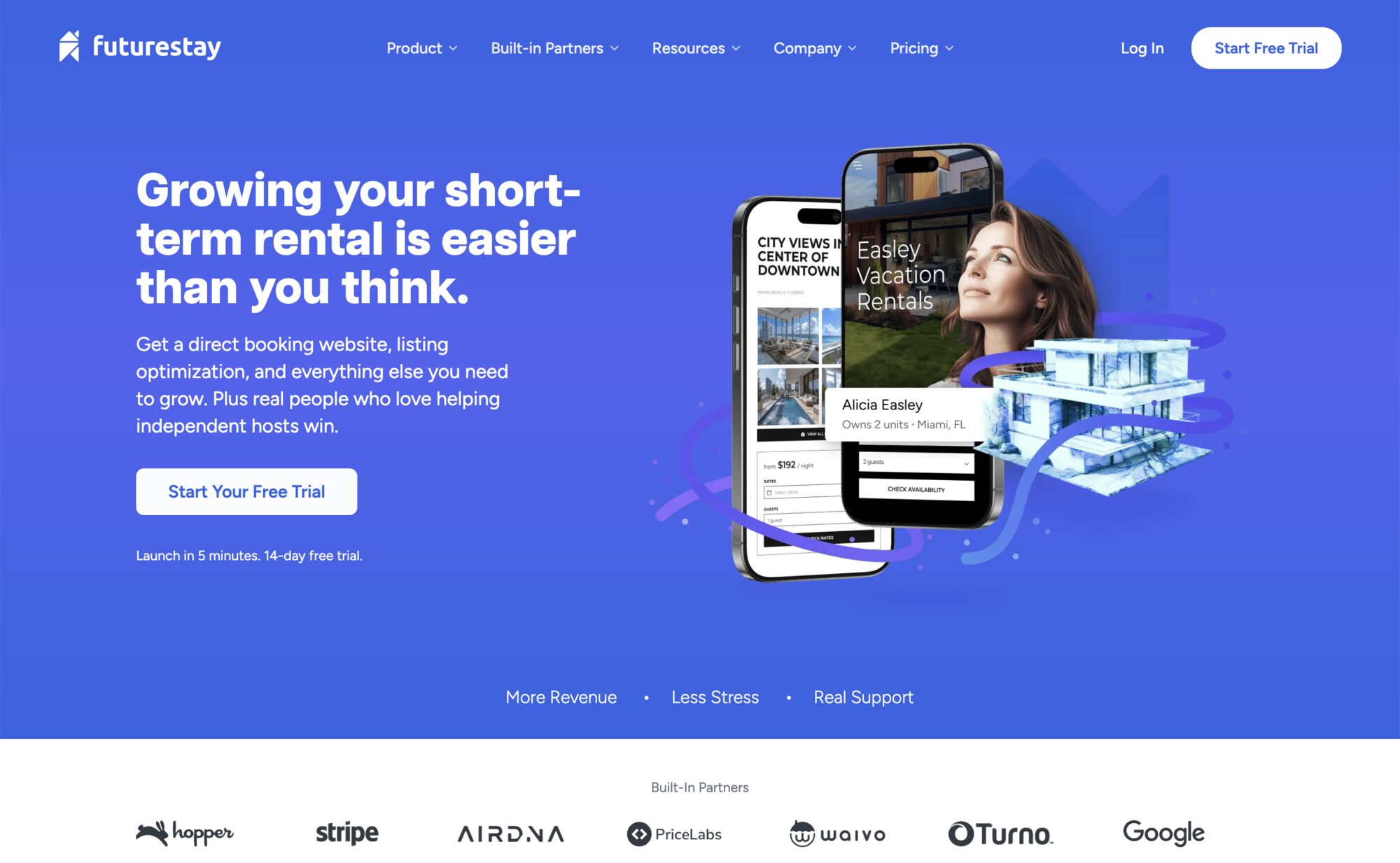
“You're building the Tesla of the industry.”
Bill Faeth, one of the most-followed voices in short-term rentals, on Futurestay's design and UX
Role
Lead product & design, and manage engineering · Effectively second in command, on the senior leadership team · A cross-functional team of 10 (a designer, 3 PMs, 6 engineers)
Timeline
2023–Present
Outcomes
40% trial-to-paid · 3.5% mature churn · ~$0 → ~$1M ARR trajectory
Context
Futurestay is a platform for short-term-rental operators, the people renting out homes on Airbnb, Vrbo, and their own direct-booking sites. When I arrived, a rebuild had gone sideways. The product was in rough shape, the funnel barely converted, and the team was pulling in different directions. There was a strong technical foundation buried under a lot of dysfunction, and no clear point of view on the experience.
Where I started
Reset the direction and got the team aligned. I set a clear product vision and a roadmap the whole company could get behind, with the CEO, founder, and every function pointed at the same priorities. The team was talented and had just lost the thread; getting a group like that moving in the same direction again, with real ownership, is the least glamorous and most important part of this kind of work, and it's where I began.
Took responsibility for the whole experience. Not just the app, but the branding and marketing design too, including a full brand refresh. I care about how the entire thing feels, from the first ad a customer sees to the tool they use every day, and I made sure someone owned that end to end.
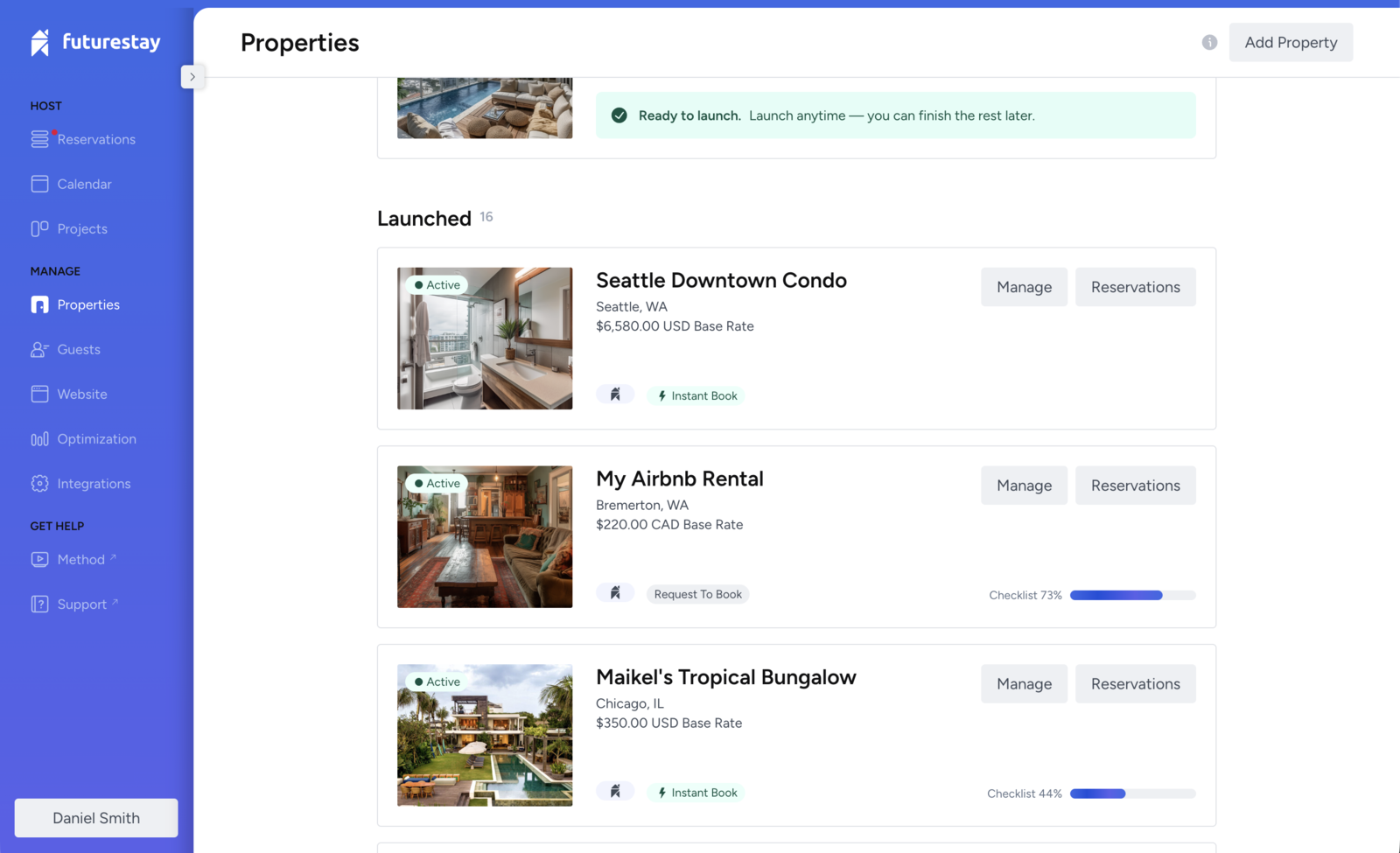
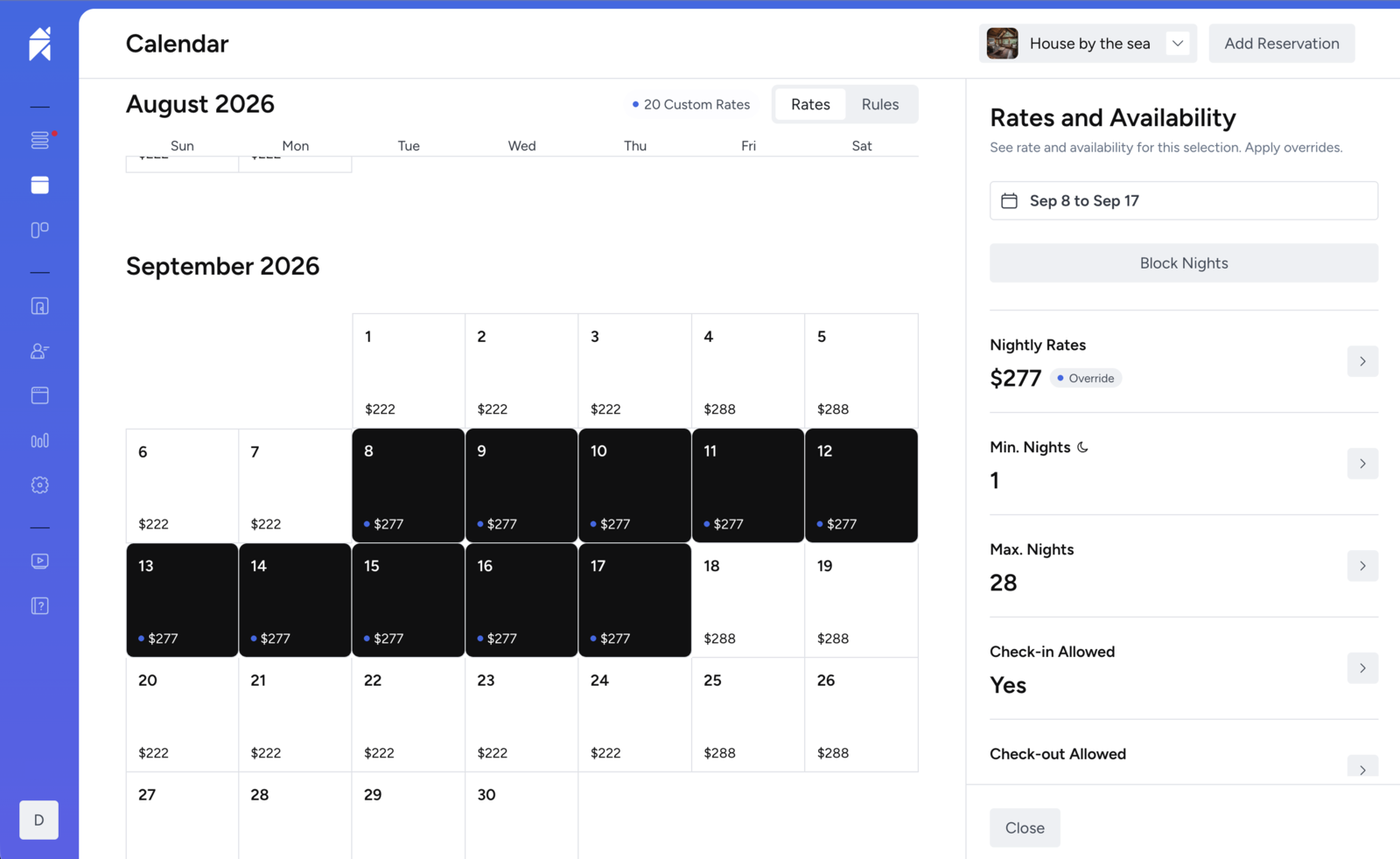
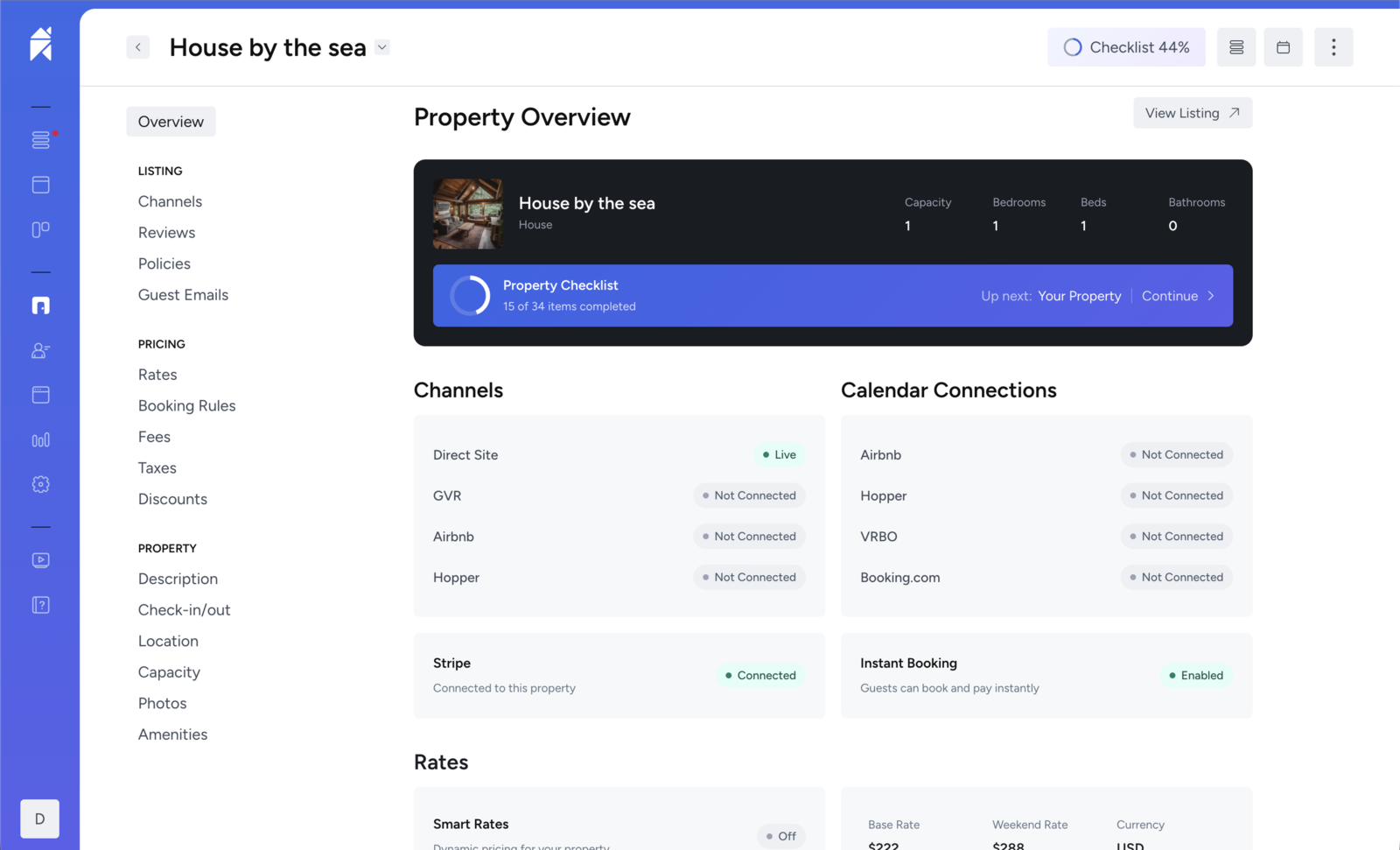
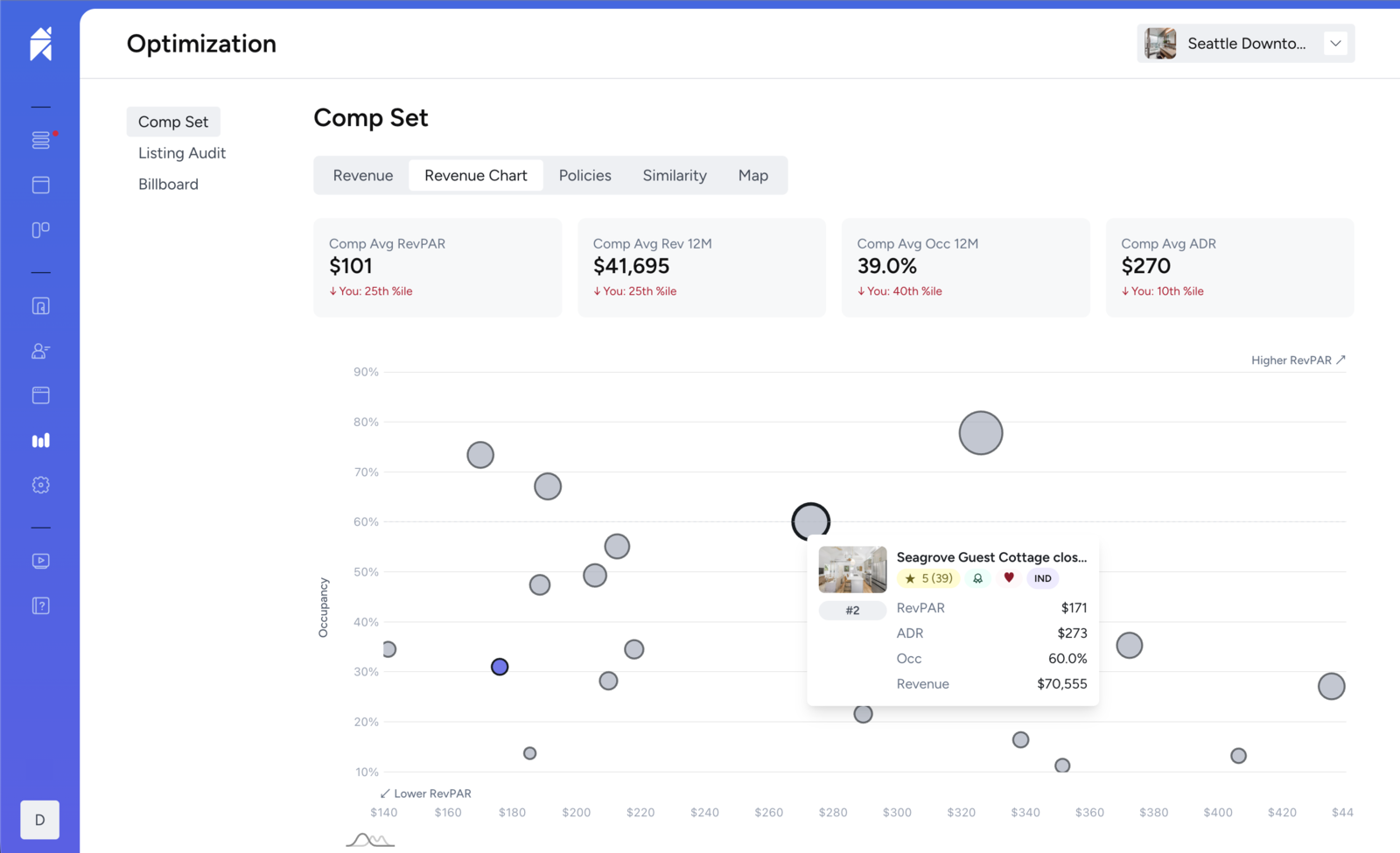
Rearchitected the product's core UX. The app had been built around the assumption that an operator has a single property; most have many, so I set a new structure organized around how they actually run their business. I made the call to model our calendar on Airbnb's patterns, since that's where most of our users come from and a familiar model removed friction instead of teaching them a new one, and the team built it into something best-in-class. Alongside that, we shipped partner integrations (Hopper, Google Vacation Rentals, Airbnb) and a set of AI features that turn a user's own data into plain-language guidance and write listing and website copy for them.
The way we design now
The change I'm proudest of is a workflow I built to fit this team: an AI-native, code-first pipeline that collapses the distance between a design idea and a working product. I set it up and coached the team into it, and it's become how designers and product managers alike do their work.
Early exploration still happens fast and cheap, in sketches and quick studies, because that's where the divergent thinking lives. But once we've chosen a direction, the work moves into code rather than into a polished Figma mockup. Our design system is mature enough that code is now the highest-fidelity place to converge: someone prototypes the feature with Claude Code directly in our real React codebase, which spins up a live preview link we use to give feedback and refine. Once it's right, we turn it into finalized tickets in Shortcut and pack it into the sprint, and engineering builds production from a working reference. Claude Code runs through the whole loop, so nothing gets lost translating a static mockup into a real interface, because the reference is already real.
-
1
Prototype
A designer or PM builds the feature with Claude Code in the real React codebase, and it spins up a live Vercel preview link
-
2
Refine
The preview link drives feedback and refinement, again with Claude Code, until the direction is right
-
3
Finalize
We turn it into finalized tickets in Shortcut, preview attached, and pack it into the sprint
-
4
Build
Engineers execute and ship production, also with Claude Code, from a working reference
The payoff is real. Interaction design and responsive behavior are correct by definition, because the prototype is real code, and it's often faster than static screens. And it scales a small team: everyone works closer to the real product, so we ship like a much bigger group. Getting a team to trust a new way of working is the hard part, and I'm proud of how they ran with it.
On systems we stay pragmatic: we start from an off-the-shelf foundation (Chakra), pull only the components we use into our own system, and build custom on top. For a small team, that's how you hold a high, consistent bar without maintaining a design system for its own sake.
Outcome
- A product operators genuinely love. Bill Faeth, one of the most-followed voices in short-term rentals, called it “the Tesla of the industry,” specifically about the design and UX.
- 40% trial-to-paid conversion and 3.5% mature monthly churn, strong funnel and retention for the category.
- The team took the business from almost no revenue toward a roughly $1M ARR run-rate, growing month over month.
What it shows
This is how I lead now: own the product direction, hold a high bar for craft, and give a team a way of working that lets a small group move like a large one. I stay hands-on in the product, but the work I'm proudest of is what the team ships together, and the workflow that lets them do it. It's the version of product and design leadership I think the next few years will reward, strategic and hands-on at the same time.
Selected screens